YUQI One China Controversy: What Her Weibo Post Means for Shuhua and i-dle (2026 Fact Check)
YUQI One China Controversy: What Her Weibo Post Means for Shuhua and i-dle (2026 Fact Check)
On November 12, 2026, i-dle member YUQI shared a Xinhua News Agency post on Weibo that echoed Chinese President Xi Jinping's remarks about national unity and Taiwan. The next day, coverage in South Korea and Taiwan turned the repost into a wider K-pop controversy, particularly because YUQI's bandmate SHUHUA is from Taiwan. The documented event is a personal social-media repost with an accompanying message. It is not, on its own, an announcement about the group's future or a public statement by all five members.
The story has several layers that are easy to confuse. What came from Xi's speech? Which words did YUQI add herself? Why are fans searching for Shuhua's reaction? Was the phrase 'Chinese Taiwan' spoken aloud in a 2023 television appearance, or did it appear in subtitles? And has there been any confirmed change to i-dle's activities? This follow-up guide separates the November 2026 facts from older incidents, political claims and speculation.
The account below is based on information publicly reported through November 13, 2026. The focus is not to assign political beliefs to everyone in the group, but to explain precisely what has been reported, what remains unconfirmed and why international fans are reading the same social-media post so differently.
- When: YUQI's repost appeared on November 12; multiple reports followed on November 13, 2026.
- Original context: Xinhua covered Xi Jinping's speech commemorating the 160th anniversary of Sun Yat-sen's birth.
- What YUQI did: Shared that report on Weibo and added approving language about a collective conviction.
- Why SHUHUA is mentioned: She is a Taiwan-born member of the same five-member group, i-dle.
- Important 2023 correction: Taiwanese contemporaneous reporting distinguished YUQI's spoken reference to Taiwan from the television subtitles reading 'Chinese Taiwan.'
- Group status: The repost does not itself establish a breakup, departure, cancelled concert or public endorsement by the other members.
- What to follow: Original posts, dated statements by the artists or agency, and actual event-organizer announcements.
1. The November 12 Weibo post: what happened, and when?

YUQI, who is from Beijing and performs internationally as a member of i-dle, shared a Xinhua News Agency item on the Chinese social network Weibo on Thursday, November 12, 2026. Reports published the following day described an accompanying statement expressing agreement with language about the unity of the Chinese nation. The subject of the shared material was not an i-dle release or a concert promotion. It was coverage of a political speech given earlier that day in Beijing.
The sequence matters because online reposts often circulate without their original timestamps. A screenshot dated November 13 may show a journalist's publication date, not when YUQI posted. Likewise, a fan account repeating the statement on another platform should not be mistaken for the original Weibo account. Keeping the two dates separate is a basic safeguard against misleading headlines that describe older content as a brand-new statement.

The rapid attention was understandable: i-dle's members work across languages and national markets, and public comments concerning Taiwan have previously caused controversy in K-pop. However, the confirmed act remains specific. One member shared a political message on her own account. Neither that action nor a later online trend automatically tells us what the other members think.
It is also worth recognizing that this was not a routine geographical update, such as mentioning a stop on a tour. The repost connected the member's own platform to a text with a clear political purpose. Calling that a significant choice is reasonable; claiming to know all of her private motivations from a single post is not.
| Date | Documented development |
|---|---|
| November 12, 2026 | Xi's speech at the Sun Yat-sen anniversary gathering in Beijing |
| November 12, 2026 | YUQI shared Xinhua-related content on Weibo with an approving message |
| November 13, 2026 | Korean and Taiwanese entertainment coverage focused on the repost and Shuhua |
| As of this update | No confirmed group-status change follows merely from the repost |
2. What exactly did YUQI write, and what came from Xinhua?

The crucial distinction is between three levels of text: the speech given at the Beijing ceremony, Xinhua's reporting and selected excerpts of it, and YUQI's own caption when she shared the material. Several headlines summarize the whole episode under the phrase 'One China,' which explains the controversy but can make it difficult to tell which person actually authored a particular sentence.
The personally added wording was reported as an endorsement of a conviction shared by descendants of the Chinese nation. The original speech also contained longer passages on national cohesion and on the Chinese leadership's position that Taiwan should be unified with the mainland. Those additional passages belong to the speech and the shared report. They should not all be presented as separate sentences invented by YUQI.

This is more than a technical editing issue. When a translated screenshot merges a celebrity's short caption with a long statement by a government figure, readers may believe the celebrity delivered an elaborate independent policy speech. At the opposite extreme, describing the repost as an entirely neutral copy-and-paste action ignores the approving nature of the accompanying message reported by multiple outlets.
For an accurate reading, find the original account, identify the portion quoted from Xinhua, and examine the accompanying caption in context. If the only evidence offered is a cropped image with the username and date missing, its value is limited until it can be tied to the actual post.
3. Why was Sun Yat-sen's 160th birth anniversary involved?

November 12, 2026 marked the 160th anniversary of Sun Yat-sen's birth. Chinese officials held a commemorative event at the Great Hall of the People, where President Xi Jinping spoke about Sun's legacy, national rejuvenation and unification. Xinhua covered the occasion and published passages from the address, providing the immediate political setting for the material that YUQI later shared.
Sun Yat-sen is an important figure in modern Chinese history. The 1911 Revolution associated with him helped end imperial rule, and his historical legacy is invoked in different ways on both sides of the Taiwan Strait. That makes a speech about him more than a generic memorial event. Contemporary governments can use historical anniversaries to emphasize their interpretations of national identity and political continuity.

The Taiwan-related parts of the speech reiterated the Chinese government's goal of unification. This detail explains why a K-pop performer's repost drew international interest even though the original event concerned a historical commemoration. The post was circulating a message that many people interpret through an ongoing disagreement over Taiwan's political future.
It is useful to keep the order clear: the anniversary ceremony happened first, the state news agency circulated its report, the singer shared that material, and entertainment coverage then connected her repost to the circumstances of a Taiwan-born bandmate. These are connected developments, but they are not identical statements or actions.
4. The 'One China' principle and Taiwan's actual political situation

The People's Republic of China promotes the One China principle, claiming Taiwan as part of China and arguing that unification should eventually be achieved. The November 12 speech restated this position. Reporting that YUQI endorsed material expressing that position should not be confused with treating the Chinese government's political assertion as an uncontested description of the island's present governance.
Taiwan is currently governed by its own elected authorities, with its own elections, institutions and administrative system. People in Taiwan hold differing views on identity and relations with the mainland, and the island's international status remains the subject of political and diplomatic disagreement. Those circumstances continue regardless of what a singer reposts on social media.

Some English-language discussions also confuse Beijing's One China principle with the differently worded One China policies adopted by other countries. Those international policies are not necessarily identical to Beijing's claims, so it is unwise to assume every government or every fan uses the phrase in precisely the same sense. The issue is sensitive partly because familiar words can conceal different political positions.
For a K-pop reader, the distinction is practical. You can report what YUQI shared, explain the political meaning of the quoted speech and recognize Taiwan's self-government without claiming that the group's five members jointly determined a disputed geopolitical question.
| Topic | What can responsibly be said |
|---|---|
| Beijing's position | The PRC claims Taiwan and advocates unification under its One China principle |
| Taiwan today | The island is governed by its own elected administration and institutions |
| YUQI's post | An individual celebrity shared and endorsed part of a politically charged message |
| Other members | Their positions cannot be inferred automatically from the repost |
5. Why SHUHUA became part of the story so quickly

SHUHUA was brought into the discussion because she is a Taiwan-born member of the same group. i-dle's lineup includes MIYEON, MINNIE, SOYEON, YUQI and SHUHUA. With members from different backgrounds and an audience across many countries, the group is a visible example of how K-pop partnerships can cross political and cultural boundaries.
Some headlines framed the question bluntly: what will happen to Shuhua? That question reflects anxiety among fans, especially those who remember previous conflicts involving Taiwanese entertainers. Yet it is a question, not evidence that Shuhua has been forced to choose a position or that her working relationship with YUQI has deteriorated.

The public information establishes their membership and the new repost. It does not establish a private argument, management ultimatum or separation. Clips showing teammates smiling together in an old variety episode cannot prove everything is fine today, just as a single awkward-looking frame cannot prove an argument occurred. Neither reading is a substitute for first-hand information.
A helpful way to approach the issue is to consider the burden that online debate sometimes places on performers who did not initiate a controversy. Shuhua can be part of a public discussion because of her background without automatically becoming a participant in another member's statement. That boundary is particularly important when fans demand immediate responses.
6. Did SHUHUA issue a statement or respond to YUQI?

As of the November 13 reporting reviewed for this article, there is no confirmed direct statement by Shuhua responding to this particular November 12 repost in the material examined. News stories discussed her situation and previous experiences, but that is different from quoting her fresh response to YUQI's words.
Online claims that Shuhua has agreed, objected, refused to speak, unfollowed a member or been ordered to keep quiet should therefore be treated separately. Each would require a specific piece of evidence with an account name, date and context. The absence of a verified statement does not justify constructing a statement on her behalf.

There is also a basic logical error in treating silence as a referendum. Not posting about a topic is not affirmative proof of support or opposition. An entertainer might choose not to address an unrelated colleague's post, might be busy with work, or might have reasons that are not public. None of those explanations can be confirmed just by counting the number of hours since a news headline appeared.
For readers trying to keep up without rumor fatigue, the simplest rule is to distinguish 'reporters are asking about Shuhua' from 'Shuhua has answered.' If the second claim cannot be connected to a dated message directly attributable to her, it remains unconfirmed.
7. Shuhua's 2026 Taoyuan role adds a new layer of context

A relevant piece of recent background predates the Weibo controversy. On October 25, 2026, Taiwan's Central News Agency reported that Shuhua had again taken on a tourism-ambassador role for Taoyuan, promoting local attractions and cultural destinations. This was an official hometown-related cultural activity, not a response to the November 12 political post.
The tourism role helps explain why her Taiwanese background is especially prominent in the conversation. She has publicly worked with a Taiwanese local government to introduce destinations, food and events to international visitors. Fans following those projects may see the connection between personal identity, public representation and a teammate's politically charged repost as particularly sensitive.

However, the chronology must remain intact. An appointment announced in October cannot be repackaged as a decision made after November 12. Nor does promoting a city automatically supply a complete account of an artist's views on sovereignty, constitutional arrangements or cross-strait relations. A tourism campaign is, first and foremost, a tourism campaign.
This distinction also guards against a common error in celebrity reporting: reading every later headline as if it had been caused by the most recent controversy. Shuhua's October project provides useful background, but it does not document a professional penalty or a fresh public political statement.
8. The 2023 Keep Running subtitle dispute: spoken words versus captions

The most important historical correction concerns a 2023 appearance on the Chinese variety program Keep Running, also referred to as Run. Some newer summaries describe YUQI as having directly said 'Chinese Taiwan.' However, contemporaneous Taiwanese coverage described a more precise sequence: she referred orally to upcoming performances in Taiwan and Hong Kong, while the broadcast's on-screen subtitles rendered those locations as 'Chinese Taiwan' and 'Chinese Hong Kong.'
Why is this important? Spoken words, edited subtitles and a journalist's retrospective summary are different kinds of evidence. If a broadcaster supplies politically framed place names in post-production, it is not accurate to quote the on-screen words as though they are necessarily an exact transcript of the performer's speech. At the same time, the appearance of those subtitles still legitimately sparked debate over the program's presentation.

Imagine three descriptions of the same clip. The first says, 'She spoke about a planned Taiwan concert.' The second says, 'The broadcaster displayed the words Chinese Taiwan.' The third says, 'She said Chinese Taiwan.' Only the first two are supported by reports emphasizing the distinction between the audio and the captions. The third can go further than the available evidence.
That older incident should not be made into the sole explanation for the new 2026 post. The November repost involves text that YUQI herself shared, whereas the 2023 controversy involved a televised performance, an editing layer and reactions to the subtitles. Both concern naming and political identity, but the evidence and responsibility are not identical.
| 2023 clip element | How to read it accurately |
|---|---|
| Spoken interview | Contemporaneous accounts describe a reference to Taiwan and Hong Kong tour plans |
| On-screen subtitles | The broadcast displayed 'Chinese Taiwan' and 'Chinese Hong Kong' |
| Later headlines | Some collapsed spoken remarks and subtitle text into one description |
| Fact-check method | Review audio, subtitle layer and the original reporting separately |
9. How the 2019 Hong Kong posts resurfaced
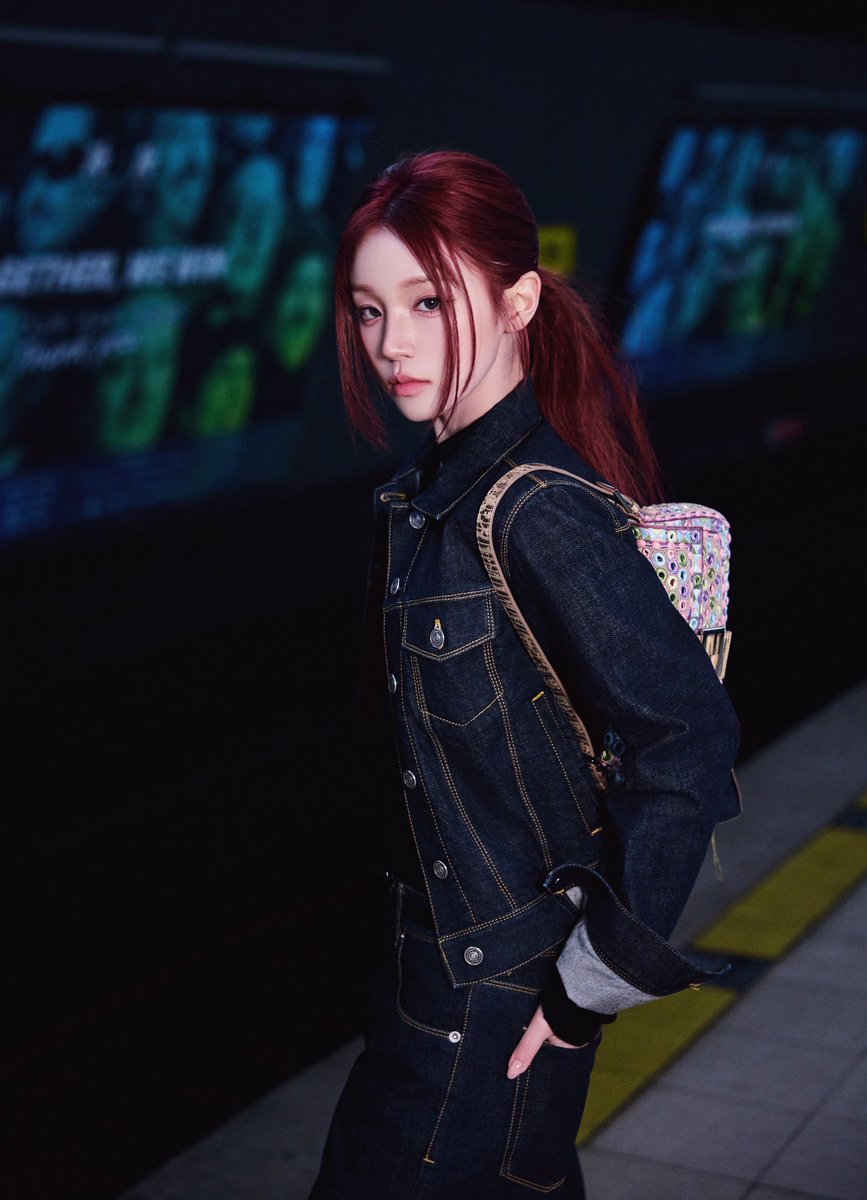
Reports published on November 13 also pointed to YUQI's earlier social-media activity during the 2019 Hong Kong protests. At that time, several Chinese entertainers working in Korean and international markets shared material involving national unity and Chinese political identity. In 2026, those older posts were recalled as evidence that politically charged online expression was not entirely new in her career.
The chronology is crucial. A post from 2019 is not new reporting about what happened in 2026, and the political context of Hong Kong's protests is different from that of Taiwan's future status. The incidents can be compared because they reveal tensions between the expectations of different fan communities, but they should not be compressed into one continuous event.

Part of the confusion comes from recycled screenshots. When an old image is shared alongside a current Weibo post with no visible date, readers may believe both were written at the same time. That can make someone's public record appear either more dramatic or more consistent than the underlying materials actually show. A careful timeline is more revealing than a collage of cropped posts.
The older history helps explain why reactions formed quickly, but it tells us little about private conversations between the members on November 12 or 13. The public record should remain a public record, not an invitation to invent a private account of what happened behind the scenes.
10. Why fans are comparing this to TWICE's Tzuyu controversy

TWICE member Tzuyu, who is also from Taiwan, became the center of a major public controversy in 2016 after footage showed her holding the flag of the Republic of China during a Korean entertainment appearance. She subsequently released an apology video amid criticism from mainland China. The episode provoked anger among many people in Taiwan and remains a recurring point of reference in entertainment coverage.
There is a similarity in the broader environment: an entertainer's public image crosses national markets where cultural symbols and political terminology are interpreted differently. Even something as brief as a flag appearance or a repost can generate consequences beyond the original entertainment context. The comparison helps international fans understand why some Taiwanese viewers may be especially uneasy now.

There is also a fundamental difference. Tzuyu's 2016 controversy grew from a displayed flag and the subsequent response. YUQI's 2026 controversy comes from a repost endorsing political language. Shuhua, meanwhile, did not initiate this new post. Treating all three performers as interchangeable erases the individual facts that make each case different.
A historical example should inform questions, not dictate predictions. The earlier case does not prove that Shuhua will apologize, that i-dle will alter its lineup or that the group faces the same commercial outcome. Such developments would require their own evidence before they could be reported.
11. Are K-pop idols expected to post political messages?

One part of the international debate is about the pressures Chinese performers may encounter when they work across entertainment markets. In mainland China's celebrity economy, public sentiment and official narratives can affect professional opportunities. Fans sometimes speculate that posts on sensitive topics are expected or strategically motivated. That broader industry discussion is relevant context, but it is not direct proof of why this individual post was made.
A public repost can be described and analyzed without claiming to know whether an agency instructed it, whether the person feared criticism or what she believed in private. Those are different propositions, and each would need its own supporting evidence. Simply because political messaging is widespread among celebrities does not mean a reader can prove an individual motive from the timing alone.

Likewise, fans are not a single political bloc. Some support the position expressed; others object to involving an international entertainment group in a dispute that touches a bandmate's home; still others prefer to focus on music. Media reports can illustrate these reactions, but a handful of quoted comments should never be presented as a statistically representative survey of every audience in China, Korea or Taiwan.
Responsible coverage allows for those differing perspectives while insisting on the same standard of evidence. We can identify the repost and its political context, describe the public debate, and be explicit about what remains unknown. Strong opinions do not make unverified details true.
12. Did the controversy change i-dle's schedule or YUQI's solo career?
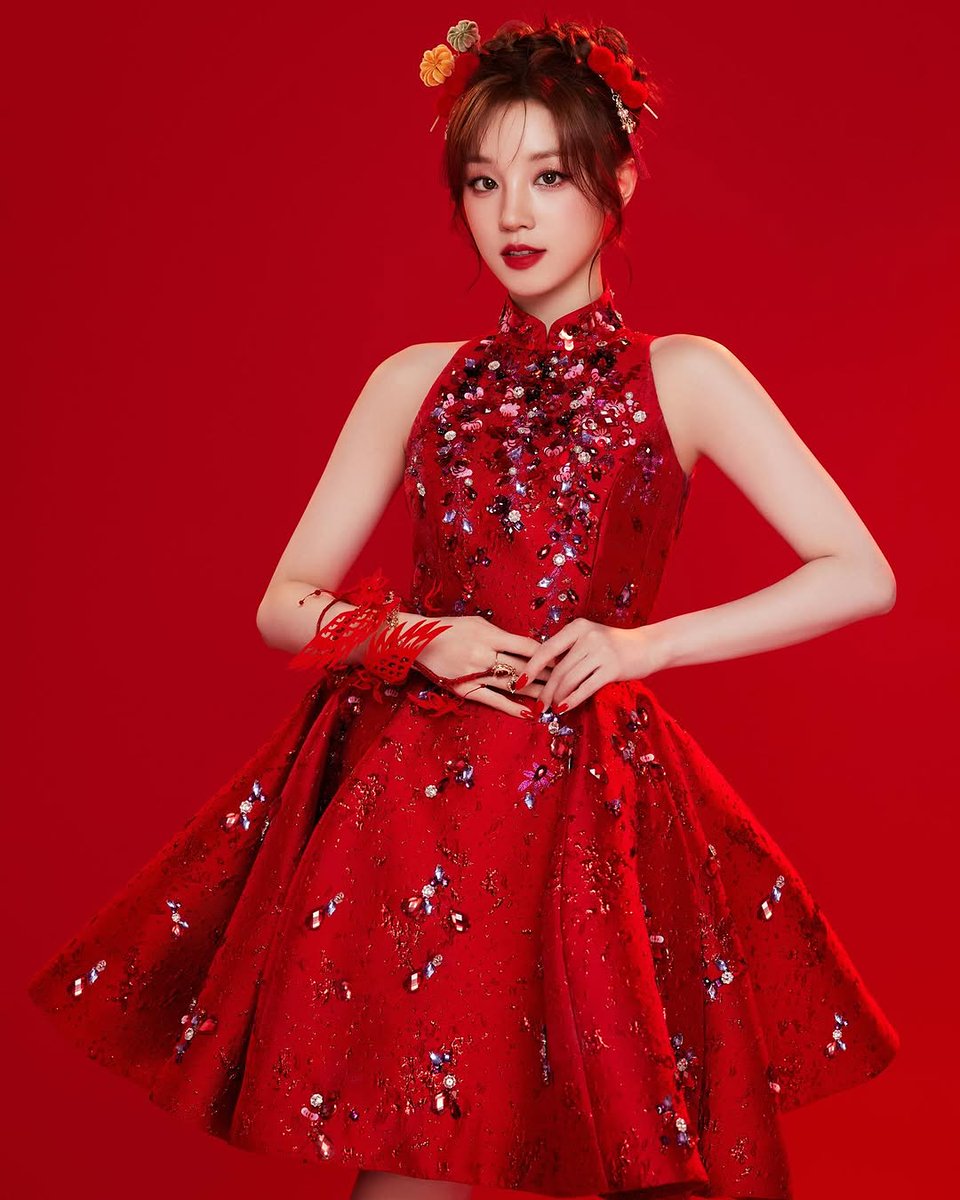
Before the November repost, YUQI had been pursuing a substantial solo music schedule in 2026. Her mini-album 27 was released in October, and October fan concerts included Guangzhou and Shanghai dates. On October 28, the group's official YouTube channel released a special live clip of 'Chamomile Tea' from the Guangzhou show. These are documented pre-controversy activities, not emergency responses to the new headlines.
Recent music and fashion appearances are useful for establishing that YUQI is an active performer, but it would be premature to convert the November 13 debate into claims of cancelled engagements, contract termination or a definite career setback. Such statements need a named event, an organizer or agency announcement, and a clear date demonstrating a change made after the repost.

The same applies to i-dle as a group. The presence of politically sensitive material on one member's account does not automatically dissolve a five-member act. Scheduling decisions involve a number of people and formal arrangements. Without a verified change announcement, there is no responsible basis for telling readers that a tour or comeback has been scrapped because of this incident.
If readers encounter a viral 'cancellation' post, three questions will usually resolve the confusion: Which specific concert or release is affected? Who officially announced the change? Was that announcement made after November 12, 2026? Without those answers, the claim should remain a rumor rather than a reported result.
| Activity | Verified timing and interpretation |
|---|---|
| YUQI's solo mini-album 27 | Released in October 2026, before the repost |
| Guangzhou fan concert | October 11, 2026, before the repost |
| Special 'Chamomile Tea' clip | Published October 28, 2026, before the repost |
| Shanghai fan-con performances | October 30–31, 2026, before the repost |
| Alleged post-controversy cancellation | Needs a separate, dated official announcement |
13. Three viral claims that need stronger evidence

Example one: 'SHUHUA has publicly criticized YUQI.' The headline may travel with an old interview clip or an unattributed translation. Check whether the words are actually from Shuhua, whether the account is authentic, and whether the message was published after the November 12 repost. A public question directed at her is not the same thing as a reply she has given.
Example two: 'YUQI personally called Taiwan Chinese Taiwan in 2023.' In older coverage, the broadcaster's subtitles used that term while the audio was reported differently. A screenshot of the subtitles proves what appeared on screen; it does not automatically establish a verbatim statement by the artist. Full video context is essential before assigning exact words to a named person.

Example three: 'i-dle is breaking up because of the One China controversy.' A claim of departure or disbandment is much more consequential than a fan's speculation about awkwardness. It requires an identifiable statement from the company, group or affected member. No amount of viral discussion can replace a confirmed change to the group's actual status.
These are illustrative fact-checking scenarios, not a declaration that any particular account has published each exact allegation. The broader principle is consistent: a screenshot is not a timeline, a subtitle is not necessarily spoken dialogue, and a reaction thread is not an agency notice. Keeping these categories apart prevents rumor from being mistaken for the next chapter of a developing story.
| Claim format | What must be checked |
|---|---|
| 'SHUHUA replied' | Original account, full statement, publication date |
| 'YUQI said these exact words' | Spoken audio versus edited subtitles or translation |
| 'The group is splitting up' | Direct official announcement and specific membership change |
| 'All fans agree' | Representative evidence, not selective comments |
14. FAQ: five questions fans are asking

Q1. Did YUQI post about One China on November 12, 2026? Yes. Multiple reports say she shared relevant Xinhua material on Weibo with an approving message, and coverage expanded on November 13.
Q2. Was the whole political speech written by YUQI? No. The event speech, Xinhua's report and her own repost caption are distinct levels of text. Readers should not attribute every quoted line in the original report to her personally.

Q3. Did SHUHUA confirm she supports or opposes the repost? No specific direct response was established by the reporting reviewed for this article as of November 13. A journalist raising the question is not evidence of a reply.
Q4. Did YUQI really say 'Chinese Taiwan' aloud on Keep Running? Some retrospective accounts describe it that way, but contemporaneous Taiwanese reporting distinguished her spoken references to Taiwan and Hong Kong from the show's 'Chinese Taiwan' subtitles.
Q5. Has i-dle broken up or cancelled performances because of the post? The repost itself does not establish any such development. A claim about a changed schedule or member status needs a separate, specific official confirmation.
15. Conclusion: the key fact is the post, not the speculation

The confirmed starting point of the November 2026 controversy is straightforward: YUQI shared a politically significant Xinhua post on November 12, and media coverage the following day connected that decision to the complicated position of a multinational K-pop group containing Taiwan-born member Shuhua. The post can be discussed as a public statement of support for language about Chinese unity without pretending that every part of the original speech was independently authored by the singer.
The follow-up questions are more complicated. Shuhua's role as a Taoyuan tourism ambassador is genuine recent background, but it predates the repost. The 2023 Keep Running dispute involved television captions as well as spoken dialogue. The 2016 Tzuyu controversy illustrates historical sensitivities, not a guaranteed outcome for i-dle. Each comparison matters most when the difference is stated as clearly as the similarity.

For fans following the story after November 13, the most useful next updates will be original statements with verifiable dates and concrete notices about group activities, if any appear. Until then, there is no reason to substitute theories about private feuds, compulsory responses or automatic disbandment for evidence. A careful account of this episode can acknowledge political disagreement and protect factual clarity at the same time.


댓글
댓글 쓰기